
Forging the Future: A Definitive Ranking of the Pittsburgh Penguins' Prospect Pipeline
From blue-chip pivot Ben Kindel to a wing-heavy supporting cast, our consensus ranking shows a farm system finally restocked, yet still starving for elite goaltending and a true top-pair blueliner. See who’s next for the Penguins and when they’ll arrive.

Introduction: The Dubas Doctrine and the Dawn of a New Era
For nearly two decades, the Pittsburgh Penguins operated under a singular, unwavering mandate: win now. With a generational core of Sidney Crosby, Evgeni Malkin, and Kris Letang, every organizational decision was calibrated to maximize the championship window. This philosophy yielded three Stanley Cups and a sustained run of excellence, but it came at a steep price. The future was consistently mortgaged for the present, leaving the prospect pipeline barren and widely regarded as one of the weakest in the National Hockey League.
The arrival of President of Hockey Operations and General Manager Kyle Dubas signaled a dramatic and long-overdue philosophical shift. Faced with an aging roster and a depleted farm system, Dubas initiated an aggressive, multi-pronged strategy to restock the organizational cupboards. This is not a traditional, protracted rebuild, but a rapid and opportunistic retool designed to build a bridge to the next era without completely bottoming out. Through savvy trades for high-end prospects and a bold, volume-based approach to the NHL Draft, the foundation for the future is being laid in real time.
This report provides the most comprehensive, consensus-based analysis of the Penguins' revamped prospect pipeline to date. By synthesizing internal scouting intelligence with external performance data, it will rank the future of the franchise, evaluate the health of the system as a whole, and assess the crucial early returns on Dubas's ambitious and essential project.
Section 1: State of the System: A Foundation of Depth, A Search for Stardom
Under the current management, the Penguins' farm system has been elevated from a league-wide afterthought to a respectable, mid-pack collection of talent. The pool is deeper, more skilled, and more diverse than it has been in over a decade. However, a candid assessment reveals that while the foundation is stronger, the system remains "shallow in premium talent" and currently lacks a "surefire elite prospect" who projects to be a franchise-altering superstar.1 The progress is tangible, but the search for a true heir apparent continues.
This rapid transformation has been built on several key strategic pillars that define the new organizational philosophy.
First is the principle of acquisition via trade. Recognizing that the draft-and-develop cycle can take years, management has proactively used assets to acquire prospects who are further along the development curve. The additions of winger Rutger McGroarty from the Winnipeg Jets and playmaker Ville Koivunen from the Carolina Hurricanes are prime examples of this strategy.1 These moves injected near-NHL-ready talent into the system, accelerating the retooling timeline.
Second is a commitment to aggressive drafting. The 2025 NHL Draft was a watershed moment for the franchise. By maneuvering to make three selections in the first round—Ben Kindel (11th), Bill Zonnon (22nd), and Will Horcoff (24th)—the Penguins made the largest single-day injection of high-end skill into their pipeline in recent memory.1 This was a clear statement of intent to build through the draft, a necessary departure from years of trading away first-round picks.
These pillars support a broader strategy of accumulating quantity to breed quality. With a total of 11 selections in the 2025 draft, the organization has adopted a portfolio approach to prospect acquisition.1 This approach, however, introduces the central tension of the entire retooling effort. While a high volume of draft picks statistically increases the probability of identifying future NHL players, it also carries the significant risk of "diluting development resources".1 A system historically thin on prospects may not possess the robust development infrastructure required to provide individualized attention to such a large and diverse group of players. The ultimate success of this high-volume strategy, therefore, hinges not just on the acumen of the scouting staff, but on the effectiveness of the development coaches in Wilkes-Barre/Scranton and throughout the organization. The on-ice performance and individual progression of players within the AHL affiliate will serve as a critical leading indicator for the health of this grand experiment.
Despite the marked improvements, critical organizational gaps persist. The system is notably "wing-heavy," and beyond the top prospect, there is "no clear future top-2 center" on the horizon.1 This places immense pressure on the development of the lone blue-chip pivot. The defense corps, while improved, is "skewed to the left side" and "lacks top-2 caliber blueliners" who project as true number-one, minute-munching anchors.1 Perhaps most concerning is the goaltending pipeline, which is described as "thin under 23, with no elite prospect," representing a significant long-term vulnerability that has yet to be addressed with the same vigor as the forward and defense groups.1 [Editor Note: Joel Blomqvist is widely regarded as a top-10 U-25 goalie and already has 15 NHL appearances, but didn't fit the criteria for this search.]
Section 2: The Consensus Rankings: A Tiered Look at the Future
The following rankings represent a consensus evaluation of the Pittsburgh Penguins' prospect pool, synthesizing all available scouting reports and performance data. To provide a clearer picture of potential impact and developmental certainty, the prospects are grouped into tiers. The table below serves as a roadmap for the detailed analysis that follows, offering a high-level overview of the players who will shape the next generation of Penguins hockey.
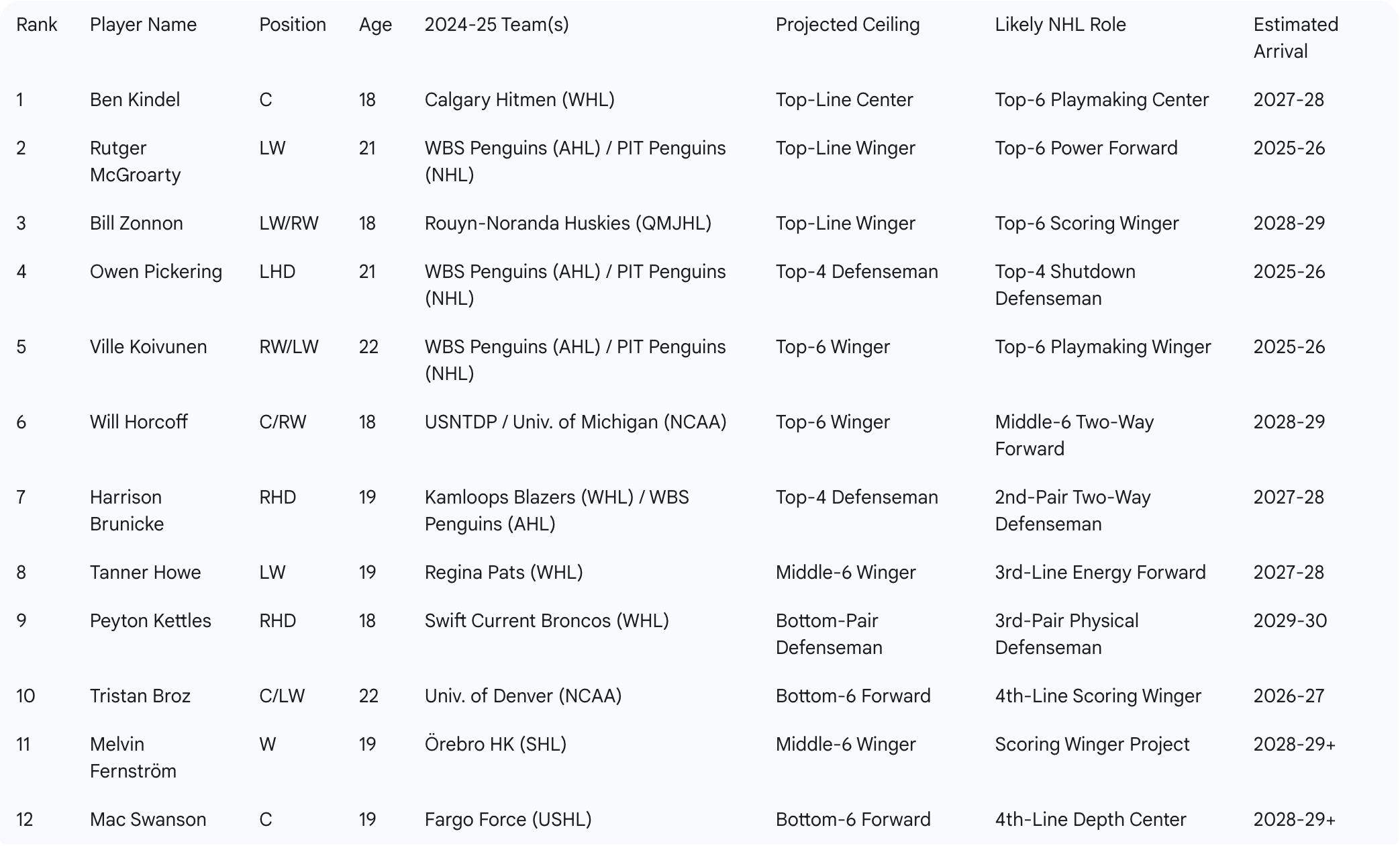
Pittsburgh Penguins Prospect Consensus Rankings
1. Ben Kindel
- Position: C
- Age: 18
- 2024-25 Team(s): Calgary Hitmen (WHL)
- Projected Ceiling: Top-Line Center
- Likely NHL Role: Top-6 Playmaking Center
- Estimated Arrival: 2027-28
2. Rutger McGroarty
- Position: LW
- Age: 21
- 2024-25 Team(s): WBS Penguins (AHL) / PIT Penguins (NHL)
- Projected Ceiling: Top-Line Winger
- Likely NHL Role: Top-6 Power Forward
- Estimated Arrival: 2025-26
3. Bill Zonnon
- Position: LW/RW
- Age: 18
- 2024-25 Team(s): Rouyn-Noranda Huskies (QMJHL)
- Projected Ceiling: Top-Line Winger
- Likely NHL Role: Top-6 Scoring Winger
- Estimated Arrival: 2028-29
4. Owen Pickering
- Position: LHD
- Age: 21
- 2024-25 Team(s): WBS Penguins (AHL) / PIT Penguins (NHL)
- Projected Ceiling: Top-4 Defenseman
- Likely NHL Role: Top-4 Shutdown Defenseman
- Estimated Arrival: 2025-26
5. Ville Koivunen
- Position: RW/LW
- Age: 22
- 2024-25 Team(s): WBS Penguins (AHL) / PIT Penguins (NHL)
- Projected Ceiling: Top-6 Winger
- Likely NHL Role: Top-6 Playmaking Winger
- Estimated Arrival: 2025-26
6. Will Horcoff
- Position: C/RW
- Age: 18
- 2024-25 Team(s): USNTDP / Univ. of Michigan (NCAA)
- Projected Ceiling: Top-6 Winger
- Likely NHL Role: Middle-6 Two-Way Forward
- Estimated Arrival: 2028-29
7. Harrison Brunicke
- Position: RHD
- Age: 19
- 2024-25 Team(s): Kamloops Blazers (WHL) / WBS Penguins (AHL)
- Projected Ceiling: Top-4 Defenseman
- Likely NHL Role: 2nd-Pair Two-Way Defenseman
- Estimated Arrival: 2027-28
8. Tanner Howe
- Position: LW
- Age: 19
- 2024-25 Team(s): Regina Pats (WHL)
- Projected Ceiling: Middle-6 Winger
- Likely NHL Role: 3rd-Line Energy Forward
- Estimated Arrival: 2027-28
9. Peyton Kettles
- Position: RHD
- Age: 18
- 2024-25 Team(s): Swift Current Broncos (WHL)
- Projected Ceiling: Bottom-Pair Defenseman
- Likely NHL Role: 3rd-Pair Physical Defenseman
- Estimated Arrival: 2029-30
10. Tristan Broz
- Position: C/LW
- Age: 22
- 2024-25 Team(s): Univ. of Denver (NCAA)
- Projected Ceiling: Bottom-6 Forward
- Likely NHL Role: 4th-Line Scoring Winger
- Estimated Arrival: 2026-27
11. Melvin Fernström
- Position: W
- Age: 19
- 2024-25 Team(s): Örebro HK (SHL)
- Projected Ceiling: Middle-6 Winger
- Likely NHL Role: Scoring Winger Project
- Estimated Arrival: 2028-29+
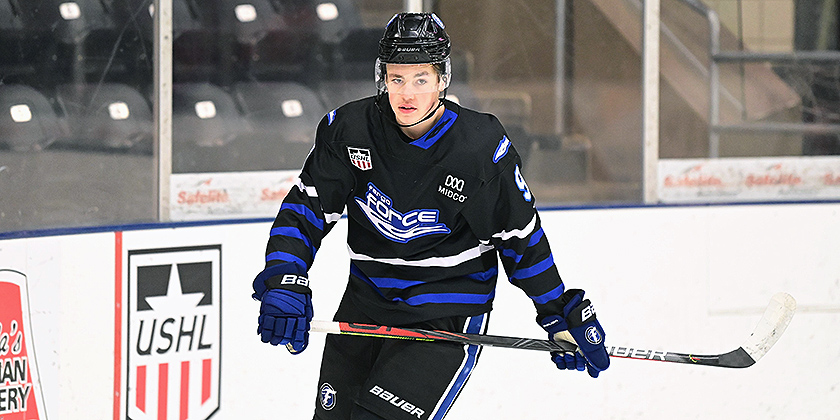
12. Mac Swanson
- Position: C
- Age: 19
- 2024-25 Team(s): Fargo Force (USHL)
- Projected Ceiling: Bottom-6 Forward
- Likely NHL Role: 4th-Line Depth Center
- Estimated Arrival: 2028-29+
Tier 1: The Blue-Chippers
This tier is reserved for prospects with the legitimate potential to become first-line or top-pairing cornerstones of the franchise. They possess the highest ceilings in the system and represent the organization's best hopes for future stardom.
1. Ben Kindel, Center
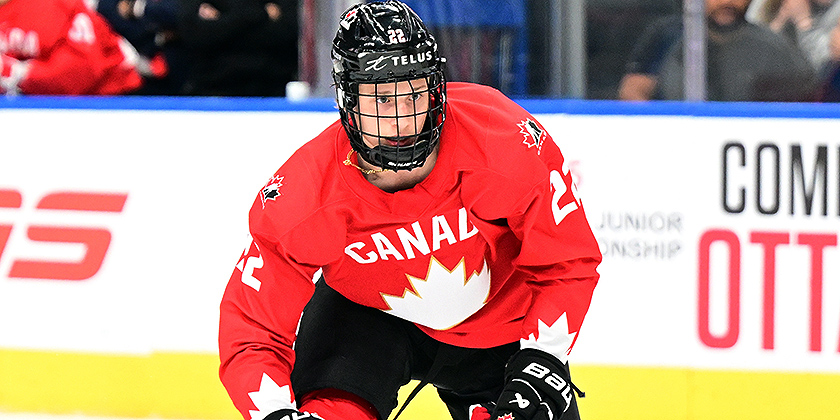
The undisputed crown jewel of the Penguins' prospect system is Ben Kindel. Selected 11th overall in the 2025 NHL Draft, he is the organization's best hope for a legitimate, play-driving, first-line center in the post-Crosby era.1 His game is a sublime blend of intellect and skill, defined by an "elite" hockey IQ for his age, "advanced vision," and "standout" puck skills that allow him to make deceptive plays in tight spaces.1 More than just a finesse player, Kindel also boasts a high compete level, leadership qualities, and a willingness to engage in puck battles.1
His 2024-25 season with the WHL's Calgary Hitmen was nothing short of dominant. Kindel amassed an incredible 99 points (35 goals, 64 assists) in just 65 games, a total that led all 2025 NHL Draft-eligible skaters and ranked seventh in the entire WHL.3 This production was validated by its context; it was achieved while facing the opposition's top defensive matchups every night.3 His campaign included a new Hitmen franchise-record 23-game point streak (15G-30A), and he elevated his game in the postseason, leading his team with 15 points in 11 playoff contests.4
The primary question mark surrounding Kindel's projection is the notation that he "lacks elite top-end speed".1 However, this concern requires nuance. Kindel's game is not predicated on being a north-south burner who wins races to the puck. Instead, he manufactures offense through superior processing speed and agility. His skating is described as "fluid with good acceleration and edge work," tools he uses to create separation in small areas rather than in open-ice sprints.1 This assessment is supported by his strong performance at the NHL Combine, where he posted top-20 finishes in agility and explosive power tests.3 The success of NHL stars like Brayden Point has proven that an elite hockey brain and exceptional quickness can more than compensate for a lack of top-gear speed. The developmental path for Kindel is not about transforming him into a track star; it is about continuing to sharpen his greatest assets—his mind and his hands—so that he can dictate the terms of engagement long before NHL-level speed can neutralize him.
With a projected ceiling as a top-line center with 80-point potential, Kindel is the centerpiece of the Penguins' future.1 He has already signed his three-year, entry-level contract 4, but is expected to return to the WHL for at least one more season of dominance before transitioning to the professional ranks. His arrival in the NHL is anticipated in the next 2-3 years.1
2. Rutger McGroarty, Left Wing
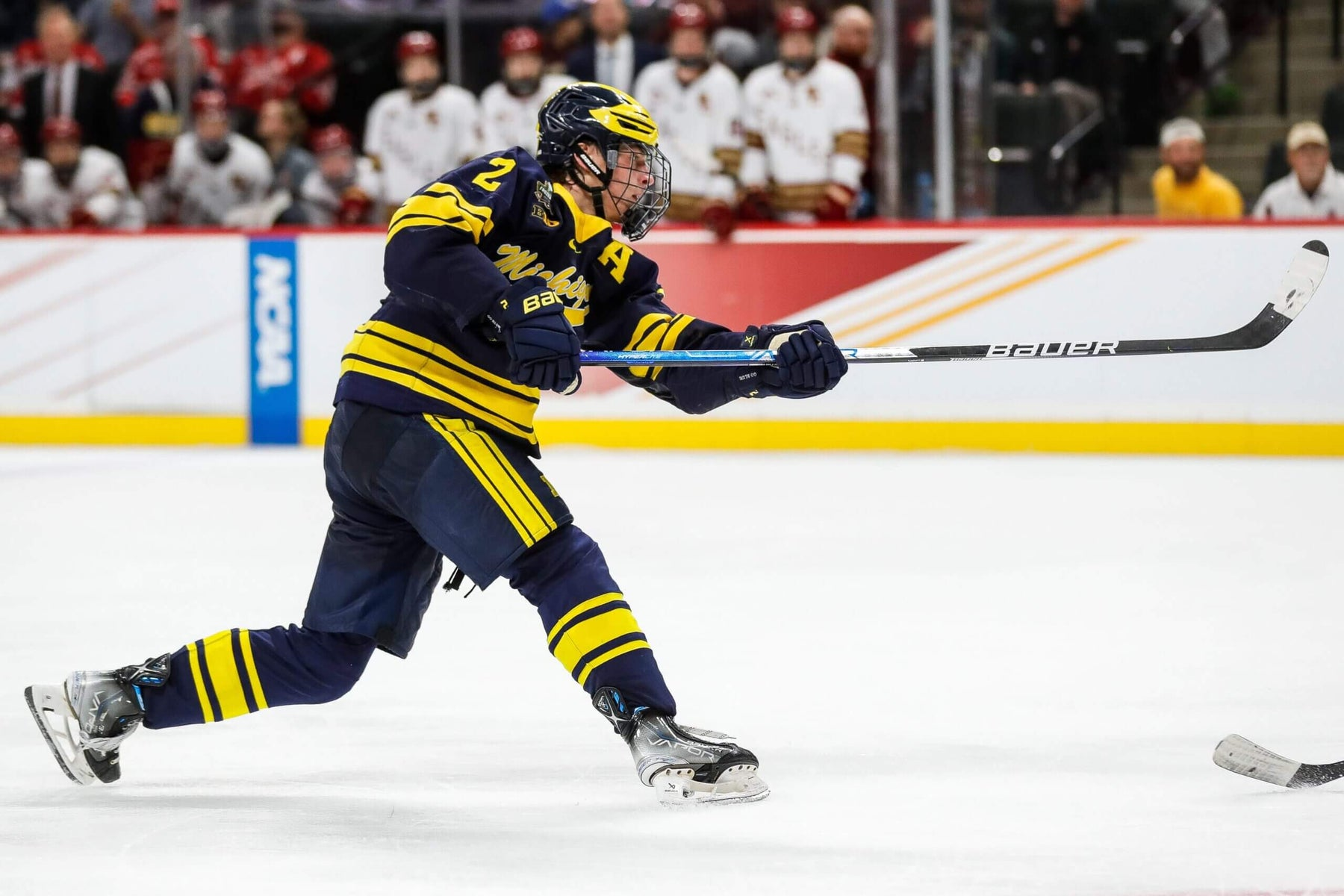
If Ben Kindel represents the long-term hope, Rutger McGroarty represents the immediate future. The most NHL-ready prospect in the system, McGroarty is a perfect embodiment of the Dubas acquisition strategy. Acquired in a trade with Winnipeg, the former 2022 1st-round pick (14th overall) is a powerful, skilled, and physically mature winger poised to make an impact in Pittsburgh sooner rather than later.1
McGroarty is the archetypal modern power forward. His scouting report is littered with high-praise descriptors: an "elite" compete level, intense physicality, and a "heavy and accurate" shot that makes him a threat, especially on the power play.1 He complements his offensive tools with reliable two-way play and a standout work ethic, giving him the versatility to contribute in all situations and across multiple lines.1
He backed up this profile with a highly successful first professional season in 2024-25. After a brief adjustment period in the AHL 7, McGroarty found his rhythm and became a key contributor for the Wilkes-Barre/Scranton Penguins, finishing with a strong 39 points (14 goals, 25 assists) in 60 games.8 More importantly, he earned an eight-game NHL call-up and did not look out of place, recording three points and posting excellent underlying possession metrics, including a 57.9% Corsi-For percentage.8
McGroarty serves as the crucial bridge from the Penguins' present to their future. While the 2025 draftees are still years away from making their mark, he is knocking on the door right now. His ability to inject youth, size, and a net-front presence into the lineup as early as the 2025-26 season provides the organization with immense roster flexibility and a tangible, near-term return on its asset management. His high floor as an effective top-nine energy player and his legitimate ceiling as a 30-goal, top-six power winger make him arguably as important to the immediate retool as Kindel is to the long-term vision.1 He is expected to compete for a full-time NHL roster spot in training camp, with an arrival timeline of "immediate to 1 year".1
Tier 2: The Next Wave
This tier includes prospects who possess a high probability of becoming impactful top-six forwards or top-four defensemen. They are key figures in the rebuild, each with a unique and valuable skill set.
3. Bill Zonnon, Wing/Center
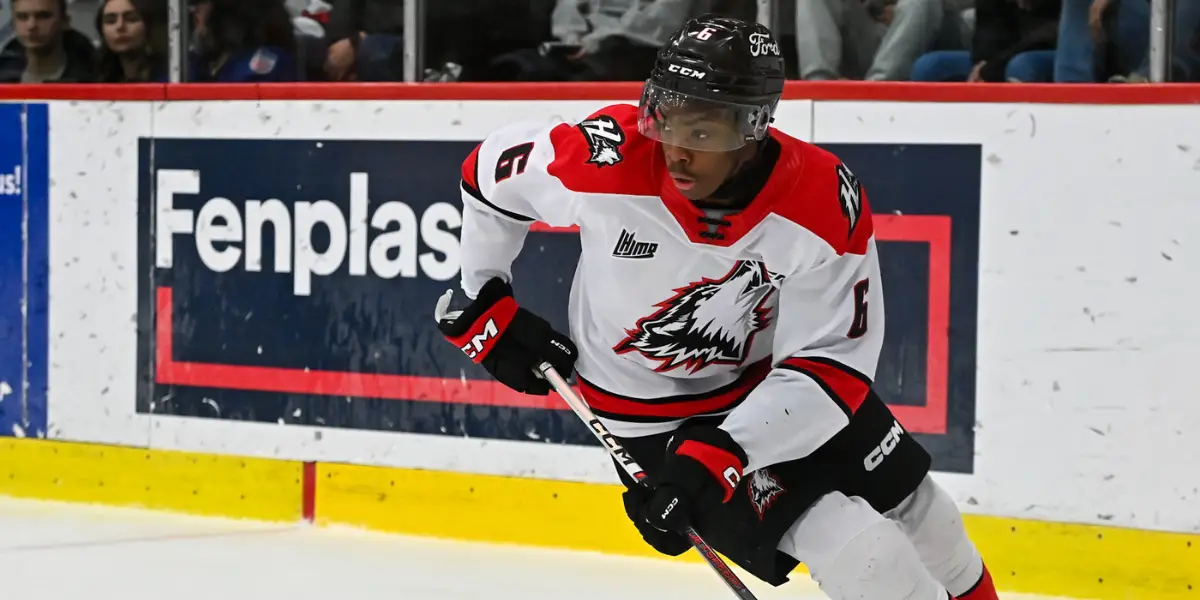
A dynamic and explosive offensive talent, Bill Zonnon was a key part of the Penguins' 2025 first-round draft haul, selected 22nd overall.1 His prospect profile is one of the most intriguing in the entire system, largely due to a significant data discrepancy in initial reports that fundamentally alters his projection. While one report listed him at a diminutive 5'9", this was a critical error. Multiple external sources confirm his actual height is 6'2", transforming his profile from a small, skilled winger into a formidable power forward with an elite toolkit.10
With this corrected frame of reference, Zonnon's profile becomes tantalizing. He combines a large 6'2", 185-pound frame with "explosive" skating, excellent top speed, and a "hard and precise" shot that marks him as a natural goal-scorer.1 His offensive prowess was on full display in the QMJHL, where he racked up 83 points (28 goals, 55 assists) in 64 games for Rouyn-Noranda.11
This combination of size, skating, and skill makes Zonnon something of a unicorn within the Penguins' system. While Rutger McGroarty is also a power forward, Zonnon's skating is described as more dynamic and "explosive," giving him the potential to be a more dangerous threat in transition.1 With his size confirmed, the developmental focus shifts dramatically. The question is no longer whether he can survive the physical rigors of the NHL, but rather whether he can refine his all-around game to fully leverage his immense physical gifts. The primary areas for improvement are his defensive consistency, which is marked by "inconsistent effort," and his faceoff ability, which will determine if he can become a true power center or if he ultimately settles in as a dominant scoring winger.1 His upside is immense, with a projected ceiling as a top-line winger capable of scoring 35 goals.1 He is a longer-term project, requiring an estimated 3-4 years of further seasoning in the QMJHL and AHL before he is ready for the NHL.1
4. Owen Pickering, Defenseman

As the highest-drafted defenseman in the system (21st overall, 2022), Owen Pickering is the prospect closest to becoming a full-time fixture on the Pittsburgh blue line.1 His game is built upon a rare and coveted foundation: the combination of elite size at 6'5" and elite skating for that frame.1 He is the quintessential modern shutdown defenseman, using his enormous reach to disrupt plays, maintain tight gap control, and exude a calm demeanor under pressure.1
While his offensive game is admittedly "limited"—a fact supported by his modest point totals of 13 points in 47 AHL games and 3 points in a 25-game NHL stint in 2024-25—his defensive impact is already translating to the professional level.1 In his first full pro season, he posted a stellar plus-18 rating with Wilkes-Barre/Scranton and positive relative possession metrics during his NHL call-up, demonstrating his ability to positively influence play even without scoring.13
Pickering's development is a case study in specialization. The organization is not trying to mold him into something he is not; they are honing his natural gifts to forge a premier shutdown, penalty-killing presence. His successful 25-game NHL audition proved that his defensive acumen is ready for the highest level.14 He fills a massive and specific organizational need and projects as the future anchor for the left side of the defense. His high floor and NHL-translatable defensive skills make him one of the most important prospects in the system. With a projected ceiling as a top-4 shutdown defenseman, he is on the cusp of a full-time NHL role, with a readiness timeline leaning closer to one year than two.1
5. Ville Koivunen, Wing

A highly skilled Finnish playmaker acquired as part of the return for Jake Guentzel, Ville Koivunen is a pure offensive creator whose stock skyrocketed after a phenomenal first full season in North America. His game is built on "elite" puck skills, "very high" hockey IQ, and sublime playmaking instincts.1 The long-standing concerns surrounding his profile have always been his "low" physicality and a slight frame that could be a liability at the NHL level.1
However, Koivunen spent the 2024-25 season emphatically answering those questions. While an internal report noted "inconsistent scoring in AHL debut," this statement lacks the crucial context of his season's trajectory.1 After an initial adjustment period, Koivunen exploded offensively, tallying an incredible "31 points in 31 games" after the calendar turned to 2025.17 He finished the year with 56 points (21 goals, 35 assists) in 63 AHL games, ranking him among the league's most productive rookies and proving that his skill could overcome the physical challenges of the smaller North American ice.17 He capped his season with a promising eight-game NHL trial, where he recorded seven assists, showcasing that his elite playmaking translates directly to the highest level.18
Koivunen has now largely proven that his skill set, honed in Finland's top professional league (Liiga), is more than viable in the NHL.17 The next step in his development is to find that elite level of consistency against the tightest checking and most restrictive defensive structures in the world. He projects as a key component of a future Penguins power play and a top-six setup man. Following his breakout AHL campaign, he will be given every opportunity to make the NHL roster out of training camp in 2025-26, with an estimated readiness timeline of 1-2 years.1
6. Will Horcoff, Wing/Center
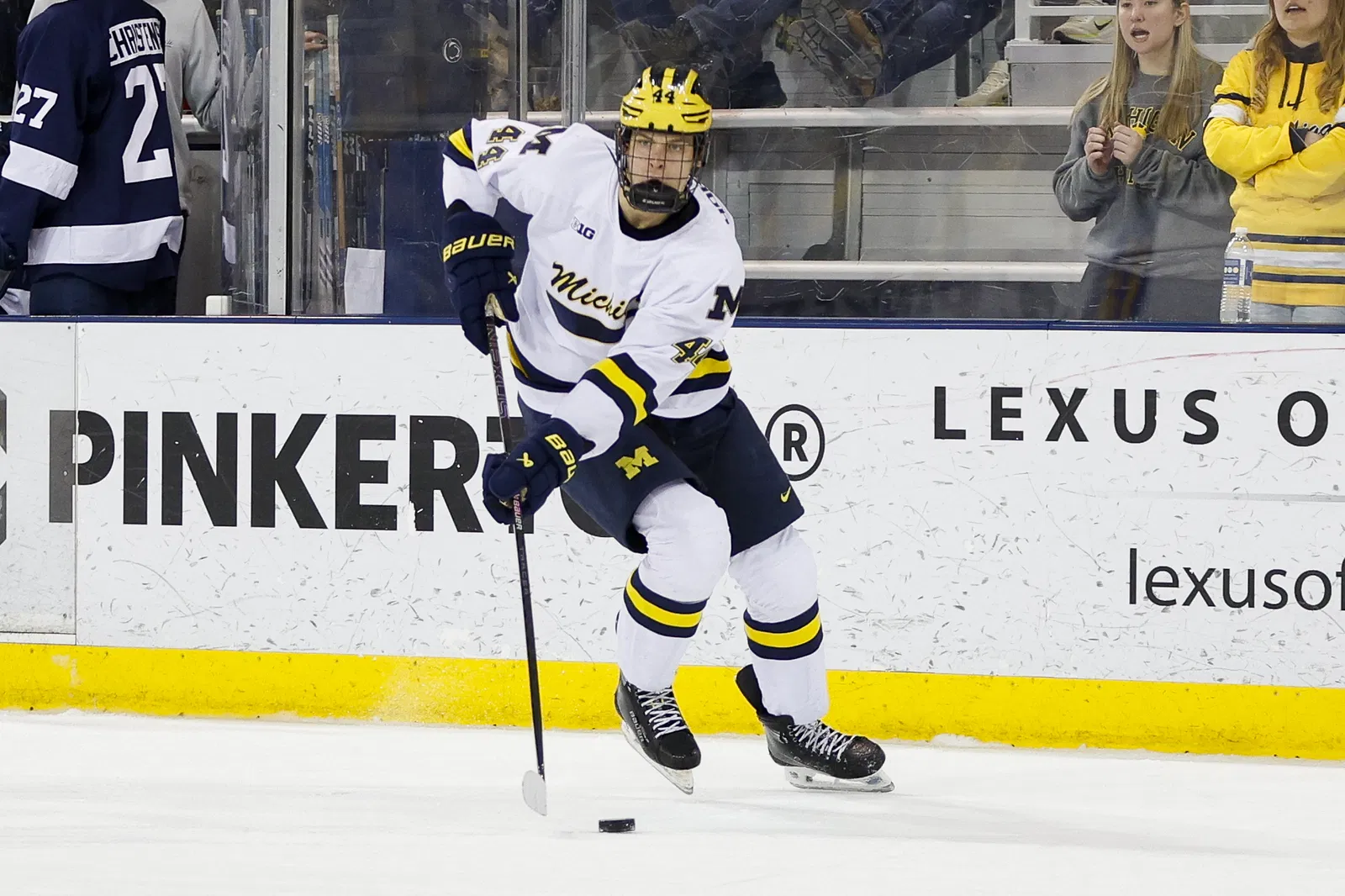
The son of long-time NHL forward Shawn Horcoff, Will Horcoff is a physical specimen with a tantalizing combination of size, skill, and NHL bloodlines. Selected 24th overall in 2025, he represents the ultimate high-upside swing from that year's draft class.1 While one report incorrectly listed his team as being in the WHL, he actually spent the 2024-25 season with the U.S. National Team Development Program before moving on to the University of Michigan.2
At 6'5" and 203 pounds, Horcoff is a "very skilled big man" who can make "small-man-type plays in tight areas," a rare and valuable combination.20 His raw athletic potential is off the charts, highlighted by his record-setting performance in the horizontal jump at the 2025 NHL Scouting Combine.22 The primary red flag noted in his profile is that his pre-draft "production was solid but not dominant".1 This observation, however, lacks the critical context that Horcoff was the single
youngest player in all of NCAA Division I hockey during the 2024-25 season.22 His 10 points in 18 games for Michigan, playing as a true freshman against men several years his senior, is therefore quite impressive.2
Horcoff should not be judged on his raw point totals at this stage. He is a ball of clay with elite physical tools and a projectable frame. The Penguins are betting on his pedigree and their development program to mold him into a top-six power forward. His development will be a slow and steady process through the NCAA ranks, but the potential payoff is enormous. He projects as a middle-six winger with scoring touch, but his unique athletic profile gives him a ceiling that could be much higher.1 He is on a 3-4 year development timeline as he continues his career at the University of Michigan.1
Tier 3: The Foundation
This tier consists of prospects who have a strong probability of becoming full-time NHL players and filling important, specific roles on the roster.
7. Harrison Brunicke, Defenseman

A second-round pick (44th overall) from the 2024 draft, Harrison Brunicke is a modern, mobile, right-shot defenseman—a highly coveted archetype in today's NHL.1 His game is built on a foundation of "excellent mobility and speed," which he uses to effectively transport the puck and join the rush.1 He possesses a hard point shot, solid puck-moving skills, and a high compete level, giving him the tools to be an effective two-way contributor.1
Brunicke demonstrated significant offensive growth in the WHL during the 2024-25 season, posting 30 points in 41 games for the Kamloops Blazers before getting a 10-game taste of professional hockey with Wilkes-Barre/Scranton to end the year.24 He is the system's best hope for a future top-four, right-shot defenseman, and his skillset perfectly complements the stay-at-home profile of the left-shot Owen Pickering. A future pairing of Pickering and Brunicke could form the long-term backbone of the Penguins' top-four defensive group, providing a balanced mix of shutdown capability and two-way acumen. His development is crucial for the overall health and balance of the defensive prospect pool. With a projected ceiling as a top-4 defenseman, he will likely return to the WHL for one more season before turning pro full-time, putting him on a 2-3 year track to the NHL.1
8. Tanner Howe, Left Wing

Tanner Howe is a quintessential energy player who combines relentless effort with a solid skill base. Selected in the second round of the 2024 draft (46th overall), his defining trait is a "very high" compete level that allows him to consistently impact the game.1 He is a feisty, agile skater with good hockey sense and a reliable two-way game, making him the type of player who can drag his teammates into the fight and set the tone with his work ethic.1
Howe projects as a future fan-favorite, a high-energy third-liner in the mold of a Brandon Tanev or Bryan Rust who can chip in offensively and provide immense value through his versatility and tenacity. This skillset gives him a very high floor as a future NHLer. The primary concerns in his profile are his smaller stature at 5'10" and a history of injuries during his junior career, which he will need to manage as he progresses toward the more physically demanding professional game.1 He is on a 2-4 year development path that will likely include an overage season in the WHL and time in the AHL.1
9. Peyton Kettles, Defenseman
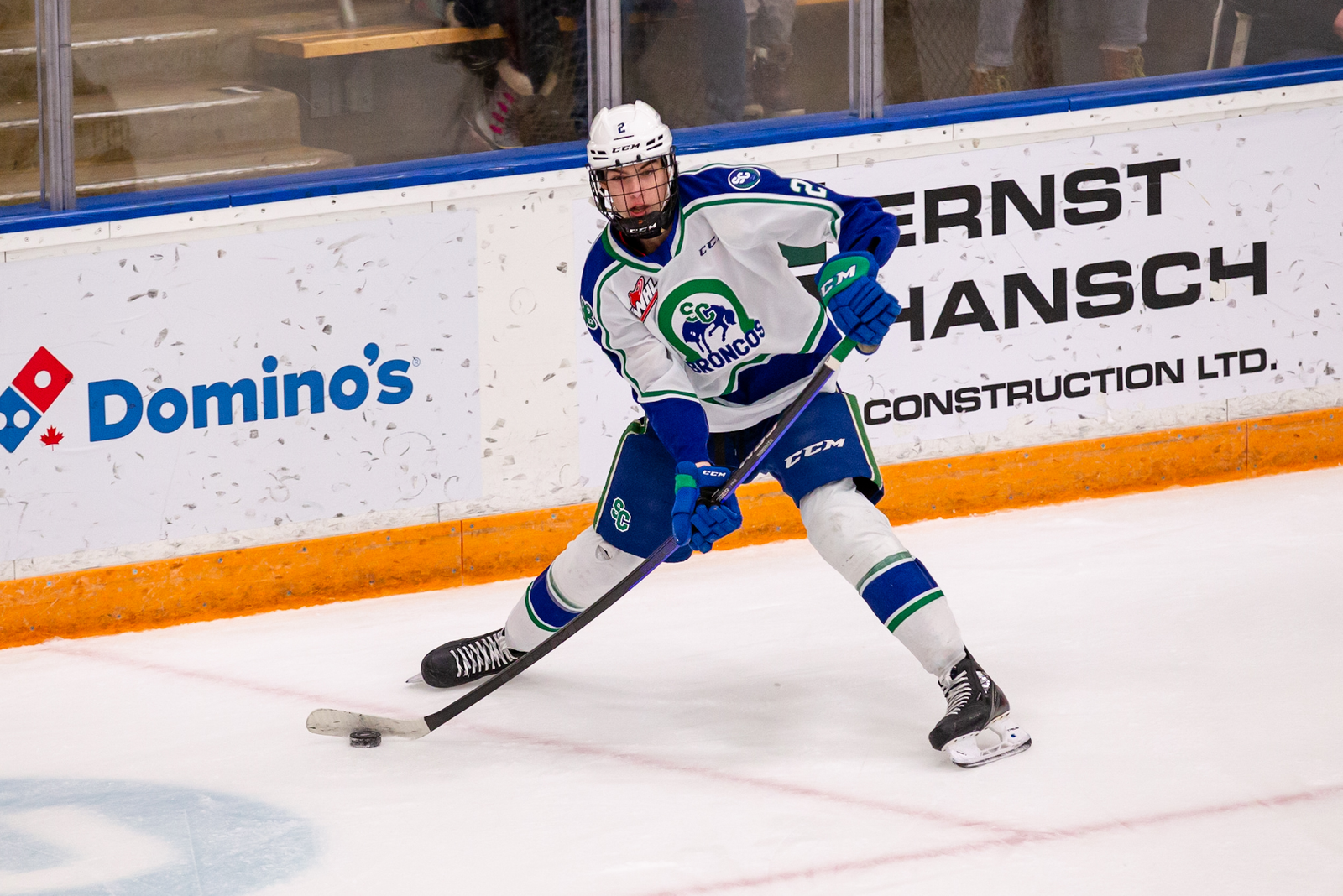
Acquired with a second-round pick (39th overall) in the 2025 draft, Peyton Kettles is a throwback, physical, stay-at-home defenseman.1 His game is defined by one word: physicality. At 6'3" [Editor Note: I believe he is actually 6'6"], he plays a hard, punishing style in the defensive zone, excelling in board battles and clearing the front of the net.1 While his defensive acumen is strong, his offensive skills are limited and his skating requires significant refinement to handle the pace of the NHL game.1
Kettles fills a specific organizational need for size, grit, and toughness on the back end. He is the stylistic opposite of a mobile puck-mover like Harrison Brunicke. His development path will be long and will focus almost entirely on improving his foot speed and four-way mobility. If his skating can catch up to his physical tools and defensive instincts, he has the potential to become a very effective third-pairing, penalty-killing specialist. He is a long-term project with a projected 4-5 year development timeline.1
Tier 4: The Long Shots
This tier includes high-upside projects and late-round gems who possess intriguing tools but require significant development and time to reach their potential.
10. Tristan Broz, Center/Wing
A skilled offensive forward, Tristan Broz took a longer development path through the NCAA, where he was a key contributor for the University of Denver.1 His game is built on "high" hockey intelligence and "excellent" puck skills, which allowed him to become a productive point-producer and power-play specialist at the college level.1 The main concerns are his "low" physicality and an average defensive game, which could limit his role at the professional level.1
Broz is a classic "boom or bust" prospect. His offensive tools are undeniable, but his professional success will depend on his ability to adapt to the tighter checking and physical demands of the AHL and NHL. His transition to Wilkes-Barre/Scranton will be a critical test. He projects as a bottom-six scoring forward, likely on the wing, where he can be deployed in offensive situations. His NHL timeline is estimated at 1-3 years, contingent on a successful transition to the pro game.1
11. Melvin Fernström, Wing
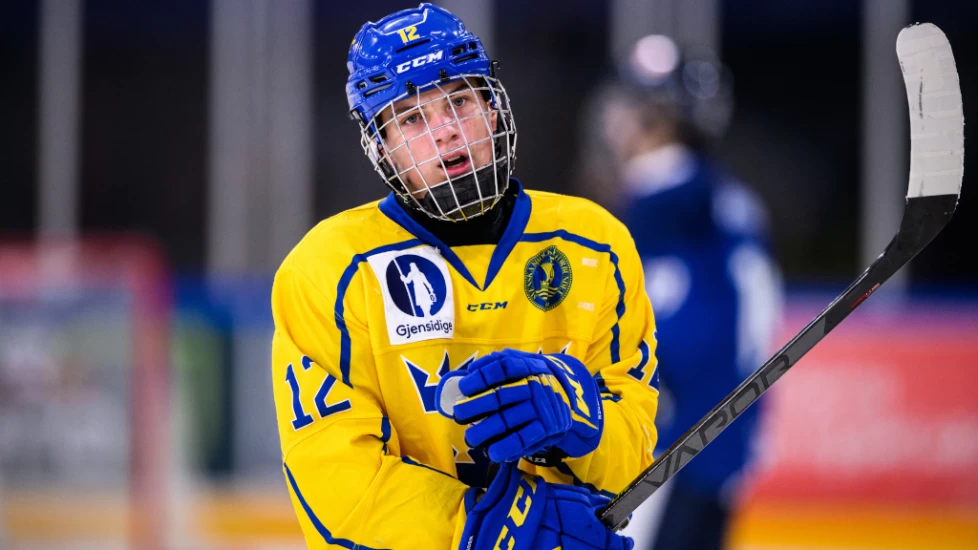
A third-round pick from the 2025 draft, Melvin Fernström is classified as a potential "late-round steal".1 A skilled Swedish winger, he represents the "lottery ticket" portion of the Penguins' draft class. He is a pure-skill bet, and the organization is hoping that with patient development in the Swedish system and eventually in the AHL, his offensive tools can blossom. If he hits his ceiling, he could develop into a middle-six scoring winger, but he is a long-term project to monitor from a distance.1
12. Mac Swanson, Center
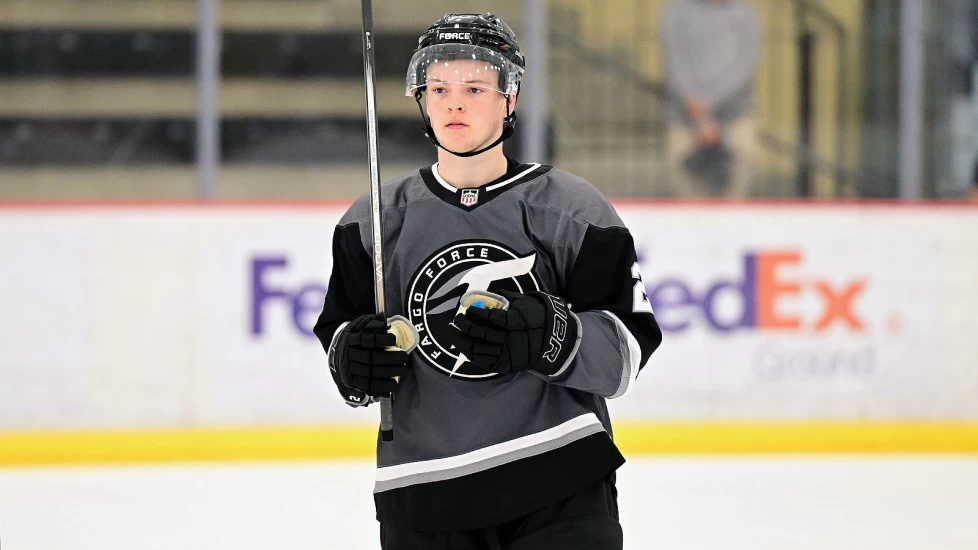
Another player flagged as a potential "late steal," Mac Swanson was a seventh-round selection in the 2024 draft.1 Swanson is a long-shot bet on pure hockey intelligence. Noted for his "high IQ" coming out of the USHL, his game is predicated on out-thinking his opponents.1 Like Broz, he is undersized and not a physical player, but the hope is that his brain can overcome his physical limitations. If everything breaks right in his development, he could potentially carve out a niche as a smart, reliable fourth-line center, providing valuable organizational depth down the middle.
Conclusion: A Brighter, But Uncertain, Horizon
The Pittsburgh Penguins' prospect pipeline has undergone a remarkable and necessary transformation. Kyle Dubas and his management team have successfully executed the first phase of their organizational retool: asset accumulation. Through aggressive drafting and shrewd trades, they have turned a barren wasteland into a respectable, mid-tier system brimming with legitimate depth and several players who possess high-end, impact potential.1 The infusion of talent from the 2025 draft class, coupled with the acquisition of near-ready prospects like McGroarty and Koivunen, has laid a tangible foundation for the future.
However, this newfound optimism must be tempered with a realistic assessment of the remaining hurdles. The system still lacks the singular, can't-miss superstar prospect needed to single-handedly define the post-Crosby era. Critical organizational gaps persist, most notably the absence of a true, number-one franchise defenseman and an elite goaltending prospect.1 Furthermore, immense pressure now falls on Ben Kindel to develop into the top-line center that the system, and the franchise, so desperately needs.1
The Penguins have successfully given themselves multiple pathways to building their next competitive core. The focus now shifts from Phase 1 (acquisition) to the far more challenging Phase 2: player development. The ultimate fate of the franchise rests not just on the raw potential of the players detailed in this report, but on the organization's ability to effectively nurture that potential into NHL reality. The foundation has been laid, but the house is still far from built. The next three to five years will be the most critical development cycle this organization has faced in a generation.
Works cited
- Grok/ChatGPT/Claude/Gemini Deep Research (See Prompt & Output Below)
- Penguins Select Forwards Ben Kindel, Bill Zonnon and Will Horcoff in the First Round of the 2025 NHL Draft, accessed July 28, 2025, https://www.nhl.com/penguins/news/penguins-select-forwards-ben-kindel-bill-zonnon-and-will-horcoff-in-the-first-round-of-the-2025-nhl-draft
- 2025 NHL Draft profile: Ben Kindel, Calgary Hitmen - Western Hockey League, accessed July 28, 2025, https://chl.ca/whl/article/2025-nhl-draft-profile-ben-kindel-calgary-hitmen/
- Penguins Sign Ben Kindel to a Three-Year, Entry-Level Contract - NHL.com, accessed July 28, 2025, https://www.nhl.com/penguins/news/penguins-sign-ben-kindel-to-a-three-year-entry-level-contract
- Ben Kindel - NHL Draft - Neutral Zone, accessed July 28, 2025, https://neutralzone.com/nhl/nhl-prospect-player/Ben-Kindel-57244/
- Benjamin Kindel Contract, Cap Hit, Salary and Stats | Puckpedia, accessed July 28, 2025, https://puckpedia.com/player/benjamin-kindel
- Pittsburgh Penguins of the Future: Rutger McGroarty Starting to Live Up to the Hype, accessed July 28, 2025, https://thehockeywriters.com/penguins-future-mcgroarty-starting-live-up-hype/
- Rutger McGroarty Contract, Cap Hit, Salary and Stats | Puckpedia, accessed July 28, 2025, https://puckpedia.com/player/rutger-mcgroarty
- Rutger McGroarty - Stats, Contract, Salary & More - Elite Prospects, accessed July 28, 2025, https://www.eliteprospects.com/player/526095/rutger-mcgroarty
- QMJHL: Bill Zonnon - Neutral Zone - Men's, accessed July 28, 2025, https://neutralzone.com/nhl-scouting-reports/qmjhl-bill-zonnon/
- Blainville-Boisbriand Armada acquire star Bill Zonnon from Huskies, Spencer Gill from Oceanic | TSN, accessed July 28, 2025, https://www.tsn.ca/chl/blainville-boisbriand-armada-acquire-star-bill-zonnon-from-huskies-spencer-gill-from-oceanic-1.2317167
- Bill Zonnon Stats And News | NHL.com, accessed July 28, 2025, https://www.nhl.com/penguins/player/bill-zonnon-8485351
- Exciting Penguins Prospect Is Big Player To Watch - The Hockey News, accessed July 28, 2025, https://thehockeynews.com/nhl/pittsburgh-penguins/latest-news/exciting-penguins-prospect-is-big-player-to-watch
- Owen Pickering Contract, Cap Hit, Salary and Stats | Puckpedia, accessed July 28, 2025, https://puckpedia.com/player/owen-pickering
- Owen Pickering Stats and Player Profile | TheAHL.com | The American Hockey League, accessed July 28, 2025, https://theahl.com/stats/player/9673
- Stats for player Pickering, Owen #38 (D) - Pittsburgh Penguins - 2025/2026 Regular Season, accessed July 28, 2025, https://www.officepools.com/nhl/entity/player/2025/regular/9289
- Penguins Prospect Ville Koivunen Breaking Out In Second Half - Pro Hockey Rumors, accessed July 28, 2025, https://www.prohockeyrumors.com/2025/03/penguins-prospect-ville-koivunen-breaking-out-in-second-half.html
- Ville Koivunen Contract, Cap Hit, Salary and Stats | Puckpedia, accessed July 28, 2025, https://puckpedia.com/player/ville-koivunen
- Ville Koivunen Stats and Player Profile | TheAHL.com | The American Hockey League, accessed July 28, 2025, https://theahl.com/stats/player/9649/84/ville-koivunen
- William Horcoff Scouting Report 2025 - My NHL Draft, accessed July 28, 2025, http://www.mynhldraft.com/2025-nhl-draft/player-profiles/William-Horcoff
- William Horcoff - Stats, Contract, Salary & More - Elite Prospects, accessed July 28, 2025, https://www.eliteprospects.com/player/576967/william-horcoff
- Horcoff Sets NHL Combine Record as 2025 Draft Approaches - University of Michigan Athletics, accessed July 28, 2025, https://mgoblue.com/news/2025/6/10/ice-hockey-horcoff-sets-nhl-combine-record-as-2025-draft-approaches
- 2025 WHL Player Tracker: NHL Development Camps - Western Hockey League, accessed July 28, 2025, https://chl.ca/whl/article/2025-whl-player-tracker-nhl-development-camps/
- Harrison Brunicke | 4yrs x 875K (PIT) - CapWages, accessed July 28, 2025, https://capwages.com/players/harrison-brunicke
- Harrison Brunicke Contract, Cap Hit, Salary and Stats | Puckpedia, accessed July 28, 2025, https://puckpedia.com/player/harrison-brunicke
- Harrison Brunicke Stats and Player Profile | TheAHL.com | The American Hockey League, accessed July 28, 2025, https://theahl.com/stats/player/10542/86/harrison-brunicke
👾 AI Usage Overview
Models
- ChatGPT o3 w/ Deep Research
- Google Gemini 2.5 Pro w/ Deep Research
- Claude Opus 4 w/ Research & Extended Thinking
- Grok 4
Prompt:
You are a professional hockey scout and analyst with deep expertise in NHL player development systems and prospect evaluation.
Please provide a detailed scouting report and assessment of the Pittsburgh Penguins’ under-23 prospects, focusing only on players who are:
• Under 23 years old, and
• Not yet fully established NHL players (i.e., no fixed games-played cutoff, but trust your judgment—if they’re clearly full-time NHLers, exclude them).Your analysis should include:
- Top 10 (or more) ranked prospects in the Penguins’ system, listed in descending order of long-term NHL potential.
- For each player, include:
• Name, position, age, draft year & round
• Current team/league (AHL, NCAA, CHL, Europe, etc.)
• Scouting breakdown: skating, hockey IQ, compete level, shot, puck skills, defensive acumen, physicality
• Strengths and standout traits
• Red flags or developmental concerns
• Projected ceiling and likely NHL role
• NHL readiness timeline- Identify any teenage standouts, high-upside swings, or late-round steals.
- Call out organizational gaps in the prospect pipeline (e.g., lack of top-4 defensemen, no future top-6 centers, etc.).
- Offer a summary evaluation of the farm system’s overall health and direction under current management.
Assume the reader is an informed executive or coach, not a casual fan—be direct, evidence-based, and don’t sugarcoat weaknesses.